Showing posts with label library book. Show all posts

Tuesday, November 5, 2013

The Fall

The Fall of the Roman Empire: A New History of Rome and the Barbarians by Peter Heather

Summary: A leading authority on the late Roman Empire and on the barbarians, Heather relates the extraordinary story of how Europe's barbarians, transformed by centuries of contact with Rome on every possible level, eventually pulled the empire apart. He shows first how the Huns overtuned the existing strategic balance of power on Rome's European frontiers to force the Goths and others to seek refuge inside the empire. This prompted two generations of struggle, during which new barbarian coalitions, formed in response to Roman hostility, brought the Roman west to its knees. The Goths first destroyed a Roman army at the battle of Hadrianople in 378 and went on to sack Rome in 410. The Vandals spread devastation in Gaul and Spain befor conquering North Africa, the breadbasket of the western empire, in 439. We then meet Attila the Hun, whose reign of terror swept from Constantinople to Paris, but whose death in 453 ironically precipitated a final desperate phase of Roman collapse, culminating in the Vandals' defeat of the massive Byzantine Armada, the west's last change for survival.

Peter Heather convincingly argues that the Roman Empire was not on the brink of social or moral collapse. What brought it to an end were the barbarians.

Review: An enjoyable thesis that argues that barbarians were responsible for the collapse of the Roman Empire.

I want to study medieval literature and I know how much has been lost over hundreds of years. I can't imagine how much has been lost over thousands of years. The Roman Empire must been hard to study and draw conclusions from. There is so much lost information and so many conflicting accounts. I can see how easy it would be to draw your own conclusions. While I have been wanting to read Gibbon for a while, I did not know that he believed that Christianity was the reason that the Roman Empire fell.

Heather believes it is the barbarians that caused Rome to fall. He goes very in depth and provides as much information as possible to support his thesis. As one reviewer mentioned, Heather focuses on the barbarians almost solely as the reason Rome fell. While I need to learn more about Rome and the possible reasons for its fall, the fall must be due to more than just the barbarians alone. I learned a good deal of information about Rome, the empire, and what plagued it. I will try to read more history and scholarship on the topic.

Rating:


Recommendation: I would recommend this book to those interested in Roman history.

Friday, October 25, 2013

Mayans, Mystery, and Murder

The Xibalba Murders (An Archaeological Mystery #1) by Lyn Hamilton

Summary: Lara McClintoch, her marriage ended and her antiques business sold, eagerly embarks on a trip to Mexico to help an old friend solve a mystery. On arrival, her friend puts off their meeting and then disappears. After Lara witnesses a brazen robbery of a valuable statue of the ancient Mayan civilization and stumbles on a corpse in a museum of antiquities, she becomes a police suspect. Afraid of the police and unsure whom to trust, Lara follows clues pointing to black marketeers and zealous revolutionaries. This dangerous trail takes her to remote archaeological ruins, lush jungles, and bustling streets filled with revelers. Lara engages in a thrilling battle of wits and courage to unmask a killer and stop a tomb-robber in the shadowy world of Xibalba, the Lords of Death.

Review: A mystery that focused heavily on the main female character instead of the actual mystery.

I read very few mysteries. The setting has to be a time period that I very much enjoy such as medieval times or during the time of the Tudors. I would probably have never picked up this book if I hadn’t used it for an A-Z reading challenge. It’s hard to find books that begin with X even though X is a great letter (my middle name starts with X). I had hoped the Mayan aspect would have made the book enjoyable, but alas, it was not to be.

Instead the mystery focused mainly on the main character who seemed full of self-pity. Lara is called to help an old friend with a possible discovery. Yes, Lara does happen to be a graduate student studying the Mayan, but she always seems to be having things explained to her like she doesn’t know anything at all. I know it’s for the benefit of the reader, but still. It made her look stupid. I also didn’t care for her pity party throughout the book. The action of the book didn’t get started until about halfway through the book and the mystery wasn’t exciting either.

Rating:


Recommendation: I would recommend this book to those that are looking for a more character driven niche mystery.

Wednesday, October 16, 2013

To the Moon

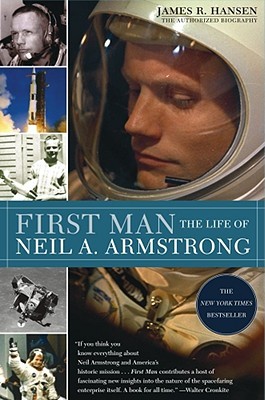
First Man: The Life of Neil A. Armstrong by James R. Hansen

Summary: On July 20, 1969, the world stood still to watch thirty-eight-year-old American astronaut Neil A. Armstrong become the first person to step on the surface of another heavenly body. Perhaps no words in human history became better known than those few he uttered at that historic moment. In a penetrating exploration of American hero worship, Hansen addresses the complex legacy of the First Man, as an astronaut and an individual.

Review: A very in depth look at Neil Armstrong’s life up until and during the Apollo 11 mission.

As someone who is fascinated by space race history and space exploration and the efforts to get us there, it was about time that I read a biography about one of the astronauts. As the first man who was on the moon, Neil Armstrong is a logical choice although I must admit that I picked this book because of a challenge (although it has been on my “to be read” shelf for a while). This biography is an authorized biography and goes very in depth about Armstrong’s life leading up to and during the Apollo 11 mission. It’s almost too much information and makes for a slow read at times.

Although it does get less noticeable as the book goes on, the author does treat Neil Armstrong as someone who can do no wrong and who is so great and wonderful. Yes I get that Neil Armstrong is a hero and needed that extra special something to make it as a test pilot and later an astronaut, but enough already. Armstrong is an intensively personal person, which is only made harder as the first man on the moon. I would have liked more details about Armstrong’s life after the Apollo 11 landing. The story at the very end was very cute.

Rating:


Recommendation: I would recommend this book to those interested in the space program or Neil Armstrong.

Thursday, October 3, 2013

Massive

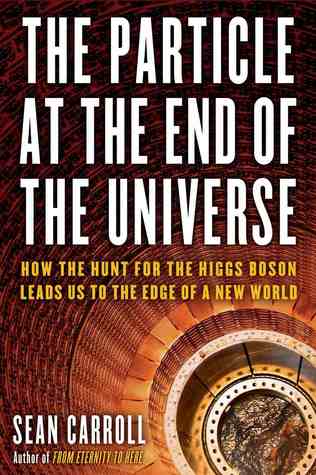
The Particle at the End of the Universe: How the Hunt for the Higgs Boson Leads Us to the Edge of a New World by Sean Carroll

Summary: Scientists have just announced an historic discovery on a par with the splitting of the atom: the Higgs boson, the key to understanding why mass exists has been found. In The Particle at the End of the Universe, Caltech physicist and acclaimed writer Sean Carroll takes readers behind the scenes of the Large Hadron Collider at CERN to meet the scientists and explain this landmark event.

The Higgs boson is the particle that more than six thousand scientists have been looking for using the Large Hadron Collider, the world’s largest and highest energy particle accelerator, which lies in a tunnel 17 miles in circumference, as deep as 575 feet beneath the Franco-Swiss border near Geneva. It took ten years to build and this search has now cost over $9 billion and required the collaboration of engineers from more than one hundred countries.

What is so special about the Higgs boson? We didn’t really know for sure if anything at the subatomic level had any mass at all until we found it. The fact is, while we have now essentially solved the mass puzzle, there are things we didn’t predict and possibilities we haven’t yet dreamed. A doorway is opening into the mind boggling, somewhat frightening world of dark matter. We only discovered the electron just over a hundred years ago and considering where that took us—from nuclear energy to quantum computing--the inventions that will result from the Higgs discovery will be world-changing.

The Particle at the End of the Universe not only explains the importance of the Higgs boson but also the Large Hadron Collider project itself. Projects this big don’t happen without a certain amount of conniving, dealing, and occasional skullduggery— and Sean Carroll explores it all. This is an irresistible story (including characters now set to win the Nobel Prize among other glories) about the greatest scientific achievement of our time.

Review: A tale that involves both the science behind the Higgs boson and the story of the discoverers and particle accelerators.

The Higgs boson, or as it's sometimes known the god particle, truly is a fascinating concept. I knew that the Higgs boson, technically the Higgs field, was supposed to give particles mass and that the Higgs boson explained why certain particles have the charge and mass that they do. Since this book focuses heavily on the Higgs boson, it goes into a lot of science behind the Higgs boson and contains a lot of information about particles and the Standard Model. Some of the information was complicated and I had to read it twice, but I certainly learned new facts.

I also liked learning more about the discovers of various particles and the particle accelerators that helped make those discoveries. I knew about the history of CERN, but it was still interesting to read. What was most fascinating was the massive amount of data that is generated and how people and computers narrowed down those massive amounts of data. Remember, thank CERN for the development of the internet. I'm excited to see what more will be learned about the Higgs boson and if that will affect the Standard Model at all.

Rating:


Recommendation: I would recommend this book to those are interested in physics or who want to know what the Higgs boson is.

Wednesday, October 2, 2013

The Twilight Years

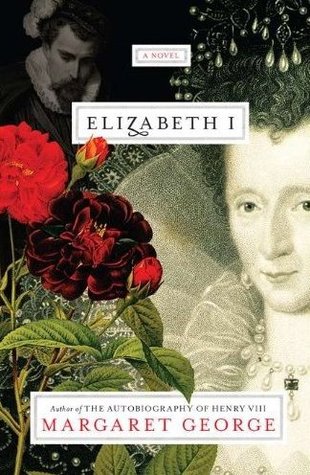
Elizabeth I by Margaret George

Summary: One of today's premier historical novelists, Margaret George dazzles here as she tackles her most difficult subject yet: the legendary Elizabeth Tudor, queen of enigma-the Virgin Queen who had many suitors, the victor of the Armada who hated war; the gorgeously attired, jewel- bedecked woman who pinched pennies. England's greatest monarch has baffled and intrigued the world for centuries. But what was she really like?

In this novel, her flame-haired, lookalike cousin, Lettice Knollys, thinks she knows all too well. Elizabeth's rival for the love of Robert Dudley, Earl of Leicester, and mother to the Earl of Essex, the mercurial nobleman who challenged Elizabeth's throne, Lettice had been intertwined with Elizabeth since childhood. This is a story of two women of fierce intellect and desire, one trying to protect her country, and throne, the other trying to regain power and position for her family and each vying to convince the reader of her own private vision of the truth about Elizabeth's character. Their gripping drama is acted out at the height of the flowering of the Elizabethan age. Shakespeare, Marlowe, Dudley, Raleigh, Drake-all of them swirl through these pages as they swirled through the court and on the high seas.

This is a magnificent, stay-up-all-night page-turner that is George's finest and most compelling novel and one that is sure to please readers of Alison Weir, Philippa Gregory, and Hilary Mantel.

Review: A historical fiction novel about Queen Elizabeth that takes place later on in her life.

I have to believe that almost all of the historical fiction books I have read about Queen Elizabeth focus on her early life, both before she was queen and when she was a new queen. A few may have covered time as Elizabeth aged, but I honestly can't remember off hand. This book starts in 1588 with the Armada threatening England. It was a nice change of pace. I had honestly forgotten how much went on later in Elizabeth's realm. I enjoyed the focus on politics. It showed Elizabeth as a ruler, not just a woman who wanted flattery.

Having parts of the story told by Lettice was an interesting choice, but also an apt one. Lettice was the one that took Robert Dudley away from Queen Elizabeth and who was also the mother of Robert, the Earl of Essex who led an unsuccessful rebellion against the queen. I had expected to dislike Lettice, but instead I felt for her. George does a good job of showing the complex personality and psychology that Lettice had, at least in the story. I can't imagine what she went through during her life.

Rating:


Recommendation: I would recommend this book to those that enjoy historical fiction about the Tudors and/or Queen Elizabeth.

Monday, September 23, 2013

Turbulent Indeed

A Royal Passion: The Turbulent Marriage of King Charles I of England and Henrietta Maria of France by Katie Whitaker

Summary: It was, from the start, a dangerous experiment. Charles I of England was a Protestant, the fifteen-year-old French princess a Catholic. The marriage was arranged for political purposes, and it seemed a mismatch of personalities. But against the odds, the reserved king and his naively vivacious bride fell passionately in love, and for ten years England enjoyed an era of peace and prosperity.

When Charles became involved in war with Puritan Scotland, popular hatred of Henrietta’s Catholicism roused Parliament to fury. As the opposition party embraced new values of liberty and republicanism—the blueprint for the American War of Independence and the French Revolution—Charles’s fears for his wife’s safety drove him into a civil war that would cost him his crown and his head.

Rejecting centuries of hostile historical tradition, prize-winning biographer Katie Whitaker uses a host of original sources—including many unpublished manuscripts and letters—to create an intimate portrait of a remarkable marriage.

Review: A tale of the ire and eventually love between Charles I and Henrietta Maria of France.

I will admit to not having much interest in this time period. For English history, I usually only read until Queen Elizabeth’s reign and occasionally I will read colonial history and about the French Revolution. From what I gathered from reading this book, this time period is certainly an explosive one with plenty of action and intrigue. While I will be focusing my reading in the coming year on the medieval period, I will try to read more about the 1600s.

Since this book focuses on the relationship between Charles I and Henrietta, it doesn’t go into too much detail about the political climate or why certain events developed the way they did. It also skips years after Charles I and Henrietta are finally in love. Despite the time skipping, you do get an idea of how the relationship between Charles I and Henrietta was. If it’s love, it’s rather cloying and obsessive love. I know that the relationship between the two was strained early on, but it’s no surprise considering that Henrietta was only fifteen from what I remember. Their relationship was certainly a tragic one.

Rating:


Recommendation: I would recommend this book to those that enjoy books about royal marriages or the 17th century.

Thursday, September 19, 2013

There's No Excuse

Lord of Wicked Intentions (The Lost Lords of Pembrook #3) by Lorraine Heath

Summary: Only one woman can break through his heart of stone...

Three young heirs, imprisoned by an unscrupulous uncle, escaped—to the sea, to the streets, to faraway battle—awaiting the day when they would return to reclaim their birthright...

Lord Rafe Easton may be of noble blood, but survival taught him to rely only on himself and to love no one. Yet when he sets his eyes on Miss Evelyn Chambers, and earl's illegitimate daughter, he is determined to have her, if only as his mistress.

After her father's death, Evelyn Chambers never imagined she would be sold to the highest bidder, yet circumstances give her little choice except to accept the lord's indecent proposal. Rafe is wealthy, as well as ruthless. Yet his coldness belies deep passion and deeper secrets. If she must be his, Evelyn intends to lay bare everything the Lord of Pembrook is hiding. But dark discoveries threaten to destroy them both until unexpected love guides the last lost lord home.

Review: A supposed romance between an illegitimate daughter and a jerky lord with no heart.

I had read the summary of the book and should have known that I might not have liked it too much. But I needed some romance books for a book challenge and the cover wasn't too cheesy. I read a few book reviews and started to dread the book a little. It especially didn't sound like something I would enjoy. I probably should have decided not to read it, but romances are easy enough reads. I didn't like this story very much at all although I will admit to be interested in reading the stories of the other brothers since they don't seem like complete jerks.

Suffering through a tough and abusive childhood does not give you leave to act like an asshole. I know the author tried to excuse his behavior and oddities by providing him with a tough past. I personally know that certain behaviors, tendencies, and thoughts will come about from an abusive childhood, but it still doesn't excuse people acting like assholes. I don't understand how Evelyn comes to love him nor how she manages to break through the barriers around Rafe's heart.

Rating:


Recommendation: I personally wouldn't recommend this book to anyone unless they happen to enjoy romances with very wounded heroes.

Wednesday, September 18, 2013

A Time Before the Queen

The Lady Elizabeth by Alison Weir


Summary: Following the tremendous success of her first novel, Innocent Traitor, which recounted the riveting tale of the doomed Lady Jane Grey, acclaimed historian and New York Times bestselling author Alison Weir turns her masterly storytelling skills to the early life of young Elizabeth Tudor, who would grow up to become England’s most intriguing and powerful queen.

Even at age two, Elizabeth is keenly aware that people in the court of her father, King Henry VIII, have stopped referring to her as “Lady Princess” and now call her “the Lady Elizabeth.” Before she is three, she learns of the tragic fate that has befallen her mother, the enigmatic and seductive Anne Boleyn, and that she herself has been declared illegitimate, an injustice that will haunt her.

What comes next is a succession of stepmothers, bringing with them glimpses of love, fleeting security, tempestuous conflict, and tragedy. The death of her father puts the teenage Elizabeth in greater peril, leaving her at the mercy of ambitious and unscrupulous men. Like her mother two decades earlier she is imprisoned in the Tower of London–and fears she will also meet her mother’s grisly end. Power-driven politics, private scandal and public gossip, a disputed succession, and the grievous example of her sister, “Bloody” Queen Mary, all cement Elizabeth’s resolve in matters of statecraft and love, and set the stage for her transformation into the iconic Virgin Queen.

Alison Weir uses her deft talents as historian and novelist to exquisitely and suspensefully play out the conflicts between family, politics, religion, and conscience that came to define an age. Sweeping in scope, The Lady Elizabeth is a fascinating portrayal of a woman far ahead of her time–an orphaned girl haunted by the shadow of the axe, an independent spirit who must use her cunning and wits for her very survival, and a future queen whose dangerous and dramatic path to the throne shapes her future greatness.

Review: A tale of Queen Elizabeth before she was queen with unbelievable characters and using a rumor I don’t like.

I’ve read six books by Alison Weir. Half of those books I’ve given three stars and the other half I’ve given two stars. Weir seems hit or miss for me. This book was a miss. Two of the three books I didn’t enjoy so much were her fiction books. I seem to enjoy her nonfiction more. I’ll continue to read her work since I like what she writes about, especially the Tudors although I might be more hesitant about reading her fiction.

I do admire Queen Elizabeth I for standing by her principles and being able to rule a kingdom when people were doubting her and clamoring for her to marry. However, I am not the biggest fan of her personality. Elizabeth was portrayed ok in this book although I felt she was too smart even though she was precocious. Everyone else was terribly out of character, at least from what I know about them. It almost felt like Weir was trying to portray Elizabeth as a sainted person who was very sinned against. It wasn’t an evenhanded portrayal. I also didn’t like that the author went against her belief and included a big rumor in the book.

Rating: 


Recommendation: I would recommend this book to those that enjoy historical fiction about Queen Elizabeth.

Thursday, September 12, 2013

Spies and Drama

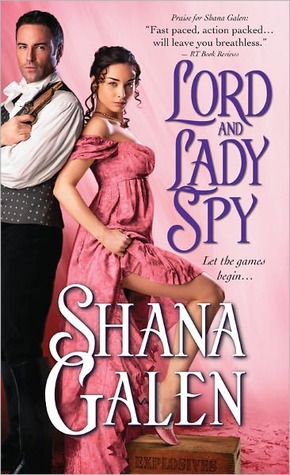
Lord and Lady Spy (Lord and Lady Spy #1) by Shana Galen

Summary: Let the games begin...

No Man Can Outsmart Him...

Lord Adrian Smythe may appear a perfectly boring gentleman, but he leads a thrilling life as one of England's most preeminent spies, an identity so clandestine even his wife is unaware of it. But he isn't the only one with secrets...

She's Been Outsmarting Him For Years...

Now that the Napoleonic wars have come to an end, daring secret agent Lady Sophia Smythe can hardly bear the thought of returning home to her tedious husband. Until she discovers in the dark of night that he's not who she thinks he is after all.

Review: An entertaining although somewhat cheesy tale about two spies who don’t know about the other.

Adrian and Sophia do seem to both be very good spies and they didn’t know about the other so I guess it goes to show you that people don’t always look too closely at what’s right under their noses. As a fellow reviewer mentioned on Goodreads, this book could have been easily told without the spy part of the story. It could have been a story of two emotionally estranged people finally learning to love and trust one another. I feel that would have made for a better story as long as it was written well.

One aspect of the spy part is that Sophia was actually a competent spy and didn’t rely on her man to do all the work as is too often the case with women that are supposedly good swordswomen, but can’t save themselves (I see that a lot in medieval romances). Although Adrian is a bit jerky at first with his women can’t be spies, men can do things better, and I won’t let you put yourself in danger, he does finally accept that Sophia is competent. I did dislike the constant bickering between them though.

Rating:


Recommendation: I would recommend this book to those that enjoy romance that has either: spies, he said she said, or a woman capable of being dangerous.

Thursday, August 8, 2013

The Story of Elizabeth and Dudley

Death and the Virgin Queen: Elizabeth I and the Dark Scandal That Rocked the Throne by Chris Skidmore

Summary: On the morning of September 8, 1560, at the isolated manor of Cunmor place, the body of a young woman was found at the bottom of a staircase, her neck broken. But this was no ordinary death. Amy Robsart was the wife of Elizabeth I’s great favorite, Robert Dudley, the man who many believed she would marry, were he free. Immediately people suspected foul play and Elizabeth’s own reputation was in danger of serious damage. Many felt she might even lose her throne. An inquest was begun, witnesses called, and ultimately a verdict of death by accident was reached. But the mystery refused to die and cast a long shadow over Elizabeth’s reign.

Using recently discovered forensic evidence from the original investigation, Skidmore is able to put an end to centuries of speculation as to the true causes of Robsart’s death. This is the story of a treacherous period in Elizabeth’s life: a tale of love, death, and tragedy, exploring the dramatic early life of England’s Virgin Queen.

Review: A book about the relationship between Queen Elizabeth and Robert Dudley that is much too long.

The title of this book is quite deceptive. I was expecting it to be about the scandal surrounding Robert Dudley after his wife's death. It's actually about the relationship between Queen Elizabeth and Robert Dudley although the death of Amy Robsart does play a large role in their relationship. The book did seem a bit long to be only about Amy's death. Even so, I didn't like how the book was mislabeled. The summary promises that Skidmore is able to put an end to the speculation of Amy's death, which it doesn't.

A reader mentioned some errors in the book. I didn't notice any glaring errors, but the fact that there were errors in the book hindered my enjoyment. Fact checking is something that needs to be to done in a non-fiction book. I also got tired of the numerous listings of what Robert Dudley or others bought and the exact prices. I know that sometimes can be useful, but too much is too much. It was slow going reading this book, but at least there wasn't too much speculation which I've noticed in non-fiction books where there isn't much evidence.

Rating:


Recommendation: I would recommend this book to those that are interested in the relationship between Queen Elizabeth and Robert Dudley.

Sunday, August 4, 2013

The Young Prince

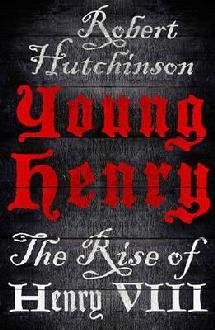
Young Henry: The Rise Of Henry VIII by Robert Hutchinson

Summary: Set during the same years of Henry VIII's life as "The Tudors, " this book charts his rise as a magnificent and ruthless monarch.

Few men have changed history as decisively as King Henry VIII. Who, though, was the prince that would be king? While Henry's elder brother Arthur, heir-apparent, was scrupulously groomed for the crown, the "spare heir" Henry enjoyed a rather indulgent childhood. Made Constable of Dover Castle at age two, and Duke of York at three, he was prepared for a comfortable life in a clerical career.

Everything changed for the ten-year-old prince when Arthur died. As King, Henry loved magnificence and merriment, and quickly swept away the musty cobwebs of his father's court. But at thirty-five and lacking an heir, the time for youthful frolic had ended. The executions would begin.

"Young Henry" provides readers with a captivating vision of the splendors and tragedies of the royal court, presided over by a resplendent yet truculent monarch.

Review: A decent biography of Henry VIII as a young man and into his early kingship.

If you are a fan of Henry VIII and the Tudors and have read non-fiction about the family and the time period or even accurate historical fiction then a reader will find little new information about Henry VIII. I do like the time period it focuses on. I especially like how it has information about Henry VII and the type of person and ruler he was. People focus so much on Henry VIII, but oftentimes seem to forget or ignore the man that fathered him and influenced him.


Henry VII seems like a fascinating figure and has some extreme contradictions like his son. I certainly plan on reading more about Henry VII along with Richard III. This books follows his life pretty chronologically although the chapters themselves are slightly focused on different aspects of his life. Despite the title, this biography is rather light on detail and also somewhat short (only 254 pages if you don’t count the index, notes, etc). I had hoped for more in depth information along with more information. I did enjoy this book, but would have really hoped for a more in-depth analysis. 

Rating:


Recommendation: I would recommend this book to those who enjoy reading about the Tudors, especially Henry VIII. 

Friday, August 2, 2013

Millions and Millions

Stealing Rembrandts: The Untold Stories of Notorious Art Heists by Anthony M. Amore, Tom Mashberg

Summary: Today, art theft is one of the most profitable criminal enterprises in the world, exceeding $6 billion in losses to galleries and art collectors annually. And the masterpieces of Rembrandt van Rijn are some of the most frequently targeted.

In Stealing Rembrandts, art security expert Anthony M. Amore and award-winning investigative reporter Tom Mashberg reveal the actors behind the major Rembrandt heists in the last century. Through thefts around the world—from Stockholm to Boston, Worcester to Ohio—the authors track daring entries and escapes from the world’s most renowned museums. There are robbers who coolly walk off with multimillion dollar paintings; self-styled art experts who fall in love with the Dutch master and desire to own his art at all costs; and international criminal masterminds who don’t hesitate to resort to violence. They also show how museums are thwarted in their ability to pursue the thieves—even going so far as to conduct investigations on their own, far away from the maddening crowd of police intervention, sparing no expense to save the priceless masterpieces.

Stealing Rembrandts is an exhilarating, one-of-a-kind look at the black market of art theft, and how it compromises some of the greatest treasures the world has ever known.

Review: A collection of interesting stories about art thefts of Rembrandt’s works with a little history about Rembrandt himself.

Art thieves, at least art thieves who steal famous works of art, never prosper. They wind up ditching the painting, using an intermediately to return the painting, or using the painting for leverage or ransom. It’s quite ironic since the thieves are expecting to make tens of thousands, hundreds of thousands, or even millions from the paintings. Despite the popular image, most art thieves are petty thieves who would steal just about anything to make a quick buck. They often grab what they think is the most valuable and oftentimes leave pieces that are just as valuable or even more valuable.

What surprised me was how some people got almost happy about art thefts, like the thief was sticking it to the rich man. But as the authors point out, when the thieves take from museums, people are losing the chance to ever see that important work of art. Museums are for the masses. The glimpses of Rembrandt’s life was fascinating and I will certainly read more about him and his paintings. His workshop churned out paintings like a modern factory line. Then he lost it all and went into bankruptcy.

Rating:


Recommendation: I would recommend this book to those that are interested in art and art history.

Wednesday, July 31, 2013

Zero Plus Zero Equals Zero

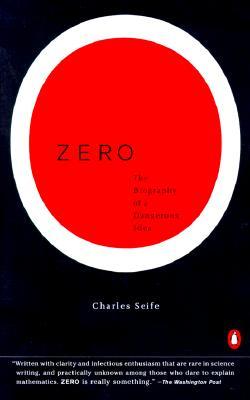
Zero: The Biography of a Dangerous Idea by Charles Seife

Summary: The Babylonians invented it, the Greeks banned it, the Hindus worshipped it, and the Church used it to fend off heretics. For centuries, the power of zero savored of the demonic; once harnessed, it became the most important tool in mathematics. Zero follows this number from its birth as an Eastern philosophical concept to its struggle for acceptance in Europe and its apotheosis as the mystery of the black hole. Today, zero lies at the heart of one of the biggest scientific controversies of all time, the quest for the theory of everything. Elegant, witty, and enlightening,Zero is a compelling look at the strangest number in the universeૼand one of the greatest paradoxes of human thought.

Review: An interesting history of zero that stretches the importance of zero too far by mixing it in with the idea of the void.

What does make zero so dangerous? This book does a good job of going over the history of the zero and how mathematics were before and after zero. I did not realize how much difference having a zero actually made nor the mathematical problems that could occur with zero. Zero really is an incredible concept and I don’t really believe that anyone fully understands zero and how it functions. I also really enjoyed learning about the different mathematical systems of various people. Our minutes and hours are derived from the Babylonians who had a base sixty number system.

What did hurt this book was the connection of zero to a philosophical void or nothingness. I know that zero represents a void or nothingness, but the voids and nothingnesses that were addressed in this book were not simple zeros. They were connected to philosophical and religious questions and discussions that could confirm someone’s belief or break it down. Regardless, I did enjoy learning about how different philosophers and theologians along with societies and religions viewed the void and nothingness and how that changed over the centuries.

Rating:


Recommendation: I would recommend this to anyone interested in the history of mathematics.

Tuesday, July 9, 2013

He Doesn't Love You!

The Queen's Pleasure by Brandy Purdy

Summary: When young Robert Dudley, an earl's son, meets squire's daughter Amy Robsart, it is love at first sight. They marry despite parental misgivings, but their passion quickly fades, and the ambitious Dudley returns to court. Swept up in the turmoil of Tudor politics, Dudley is imprisoned in the Tower. Also a prisoner is Dudley's childhood playmate, the princess Elizabeth. In the shadow of the axe, their passion ignites. When Elizabeth becomes queen, rumours rage that Dudley means to free himself of Amy in order to wed her. And when Amy is found dead in unlikely circumstances, suspicion falls on Dudley - and the Queen...Still hotly debated amongst scholars - was Amy's death an accident, suicide, or murder? - the fascinating subject matter makes for an enthralling read for fans of historical fiction.

Review: A much too long historical fiction novel about Robert Dudley and Amy Robsart.

There was actually very little sex which was surprising considering what I’ve heard about The Boleyn Wife, from my experience with The Tudor Throne, and the book’s title. The book also focuses heavily on Amy Robsart, which would have been fine if the damn book hadn’t been so long and if Amy was actually a character worth anything. I understand that she fell hard in lust (most certainly not love) with Robert Dudley and that the lust quickly faded. I thought she would have figured out rather quickly that Robert did not love her anymore. Instead she spends the whole book still “in love” with him and always trying to get him to come back to her.

Her pining takes up a surprising amount of the book and it downright boring to read. Robert Dudley was also an ass. I always like the idea of love between Elizabeth and Robert, but in this book, it’s only love due to his great ambition. Elizabeth has the right of it when she questions whether Robert would still love her if she wasn’t queen. I am not sure how ambitious he was in real life, but he was ambitious almost beyond believing along with constantly verbally and physically abusing his wife. Elizabeth was the only character actually worth a damn.

Rating:


Recommendation: I would recommend this book to those interested in the scandal of Amy Robsart's death.

Wednesday, July 3, 2013

The Smell of Decomposition in the Morning

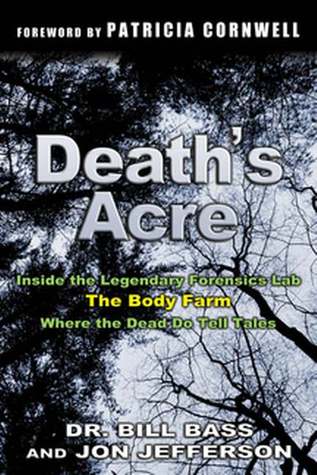
Death's Acre: Inside the Legendary Forensic Lab - The Body Farm - Where the Dead Do Tell Tales by William M. Bass, Jon Jefferson

Summary: Forensic science and murder investigations are among the most fascinating topics of our time. Dominating television and print media every season, both as fiction and nonfiction, the subject could not be hotter. As one of the world's leading forensic anthropologists, Dr. Bill Bass is the premier guide to this unusual world.

Nowhere is there another lab like Dr. Bass's: on a hillside in Tennessee, human bodies decompose in the open air, aided by insects, bacteria, and birds, unhindered by coffins or mausoleums. At the "Body Farm," nature takes its course with corpses buried in shallow graves, submerged in water, locked in trunks of cars. As scientific stand-ins for murder victims, they serve the needs of science-and the cause of justice.

For thirty years, Dr. Bass's research has revolutionized the field of forensic science, particularly by pinpointing "time since death" in murder cases. In his riveting book, he investigates real cases and leads readers on an unprecedented journey behind the locked gates of the "Body Farm." A master scientist and engaging storyteller, Bass shares his most intriguing cases: his revisit of the Lindbergh kidnapping and murder fifty years later; the mystery of a headless corpse, whose identity astonished police; the telltale bugs that finally sent a murderous grandfather to death row-and many more.

Review: A collection of tales with each one focusing on a specific case and some facts about Dr. Bass thrown in.

I really thought this book would be a good read or at least an interesting read. I love bones, the body, diseases, and how much forensics can tell us. I know that forensic anthropology along with forensic science would be nothing like they show on tv (although it would be cool if it was). Still, I was expecting some fascinating history and gruesome cases. Most of the cases are interesting enough, but their telling gets interrupted by Dr. Bass telling us another tidbit of his life or personal history.

I know that a lot of what he tells is about the history of forensic anthropology and does relate to the case being told. A lot of it is extraneous and adds nothing or little value. I am sure Dr. Bass is a great forensic anthropologist (he is certainly quick to tell us that), but I didn’t like him much as a person. He talks about killing snakes, gets married fourteen months after his first wife dies (something I can’t imagine doing on a personal level), and is always quick to tell us about how great he is.

Rating:


Recommendation: I would recommend this book to those interested in forensic anthropology.

Monday, July 1, 2013

Evidence Please

The Last Knight: The Twilight of the Middle Ages and the Birth of the Modern Era by Norman F. Cantor

Summary: There may be no more fascinating historical period than the late fourteenth century in Europe. It was a world in transition, soon to be replaced by the Renaissance and the Age of Exploration - and John of Gaunt was its central figure. Norman F. Cantor, the best known and most popular historian of the Middle Ages, brings Gaunt to life in his newest work, The Last Knight." John of Gaunt was the richest man in Europe, apart from its monarchs, and he epitomized and surpassed the ideals of the late Middle Ages. From chivalry - he was taught at a young age to fight on horseback like the knights of old - to courtly love - his three marriages included two romantic love-matches - he was an ideal leader. He created lavish courts, sponsoring Chaucer and proto-Protestant religious thinkers, and he survived the dramatic Peasants' Revolt, during which his sumptuous London residence was burned to the ground.

Review: A barely there biography of John Gaunt along with sweeping generalizations and many references to homosexuality and billionaire capitalists.

I am very interested in medieval history along with medieval literature. I want to study the medieval period for my PhD. I plan on starting to read more about the medieval period along with medieval scholarship. The Last Knight seemed like a good book to read to get an idea of the late medieval period. Unfortunately, some reviews on Goodreads warned me that the book might not be such a great read. Reading the book only confirmed the poor quality of this book.

The author has won awards and honors and is has written a number of bestsellers. For someone who has researched and written about scholarly subjects, I found his scholarship lacking. The author's biography on Goodreads puts it best: his books generally received mixed reviews in academic journals. He makes grand sweeping generalizations and provides little to no evidences, assumes to know what John Gaunt was thinking and feeling, and often harps on homosexuality and billionaire capitalists. I did learn some interesting information about the medieval although I plan on reading more accurate books to gain more knowledge and understanding.

Rating:


Recommendation: I can't recommend this book due to the faulty and misleading content.

Sunday, June 30, 2013

Which One are You Again?

Her Highness, the Traitor by Susan Higginbotham

Summary: As Henry VIII draws his last breath, two very different women, Jane Dudley, Viscountess Lisle, and Frances Grey, Marchioness of Dorset, face the prospect of a boy king, Edward VI.

For Jane Dudley, basking in the affection of her large family, the coming of a new king means another step upward for her ambitious, able husband, John. For Frances Grey, increasingly alienated from her husband and her brilliant but arrogant daughter Lady Jane, it means that she—and the Lady Jane—are one step closer to the throne of England.

Then the young king falls deathly ill. Determined to keep England under Protestant rule, he concocts an audacious scheme that subverts his own father’s will. Suddenly, Jane Dudley and Frances Grey are reluctantly bound together in a common cause—one that will test their loyalties, their strength, and their faith, and that will change their lives beyond measure.

Review: A tale of Lady Jane Grey from the viewpoint of two women that are much too alike.

It was nice to read a story of Lady Jane Grey that didn't have Jane Grey portrayed as a saint who suffered at the hands of her mother. Although it's hard to get a good idea of her personality in this book since Jane Grey's story is told from two people: Frances Grey and Jane Dudley, I did get the feeling that Jane thought highly of herself, was proud, and would stick to her morals and beliefs even at the risk of harm. The conflict between Jane Grey and her mother mainly came from Jane's pride and adolescence.

Despite all that, this book was hindered by being told from two points, two different women who seemed the same. When there wasn't a good way to tell them apart, I found myself flipping to the next chapter to see whose chapter I was reading (the chapters switch off). I felt like the author was trying to take the blame off the women and place it squarely on the men's shoulders. It felt very fake and I can't believe the women not being the least excited about a daughter being queen or a son being married to a queen.

Rating:


Recommendation: I would recommend this book to those that are interested in a different story of Lady Jane Grey.

Wednesday, June 26, 2013

A Flat Paper Doll

Wolf Hall (Thomas Cromwell Trilogy #1) by Hilary Mantel

Summary: Tudor England. Henry VIII is on the throne, but has no heir. Cardinal Wolsey is charged with securing his divorce. Into this atmosphere of distrust comes Thomas Cromwell - a man as ruthlessly ambitious in his wider politics as he is for himself. His reforming agenda is carried out in the grip of a self-interested parliament and a king who fluctuates between romantic passions and murderous rages.

Review: A tale of the Tudors from the eyes of Thomas Cromwell.

I knew very little about Thomas Cromwell. I had certainly heard the name and am certain that I had read about him before in Tudor related non-fiction, but for some reason, it didn’t seem to stick. I did a little Wikipedia reading after I finished Wolf Hall and plan to read more about him. Thomas Cromwell is indirectly and directly related to many actions that were taken and events that occurred concerning the Tudors. This book focuses on Thomas Cromwell so we see events unfold from his point of view. There is nothing to mark the thoughts of other characters from direct quotes or the third person narration.

All the characters that weren’t Thomas Cromwell seemed barely like characters at all, even Henry VIII. Events that should have been emotional impact don’t have any at all. It all falls flat even the death of Cardinal Wosley and his wife. Also, Thomas Cromwell felt flat as well. I am honestly not sure how Hilary Mantel wanted to portray him. I assume the man had more personality than he does in the book. He acts little better than a paper doll.

Rating:


Recommendation: I would recommend this to those who like Tudor fiction about less popular historical figures.

Saturday, June 8, 2013

I Can Think of Another Name

A Rogue by Any Other Name (The Rules of Scoundrels #1) by Sarah MacLean


Summary: A decade ago, the Marquess of Bourne was cast from society with nothing but his title. Now a partner in London’s most exclusive gaming hell, the cold, ruthless Bourne will do whatever it takes to regain his inheritance—including marrying perfect, proper Lady Penelope Marbury.

A broken engagement and years of disappointing courtships have left Penelope with little interest in a quiet, comfortable marriage, and a longing for something more. How lucky that her new husband has access to such unexplored pleasures.

Bourne may be a prince of London’s underworld, but he vows to keep Penelope untouched by its wickedness—a challenge indeed as the lady discovers her own desires, and her willingness to wager anything for them... even her heart.

Review: A forced marriage "romance" story with a complete asshole for a main male character.

I had wanted to read this for a while. Honestly, it was mostly because I liked the cover a lot. I'm a sucker for pretty covers, especially when there are pretty dresses and/or the cover isn't too terribly embarrassing. Perhaps I should have not been expecting too much since I read Nine Rules to Break When Romancing a Rake and didn't it enjoy it much (it got two stars). The main character in that book, Ralston, was a jerk that took advantage of the heroine too many times to count.

What really bothered me was how Bourne went about forcing Penelope to marry him. They had been childhood friends and should have known damn well that Penelope would have still cared about him. He could have easily asked her to marry him (without trying to ruin her) and I'm pretty sure she would have said yes. Instead, he forces her into marry and acts like a jackass the whole novel. I know that Bourne was her childhood friend, but Bourne as a man was a completely different person and there wasn't a good reason for his change in character. There was nothing to redeem him.

Rating:


Recommendation: I would recommend this book to those that historical romances with childhood friends becoming more.

Monday, June 3, 2013

A Heart Blinded by Love

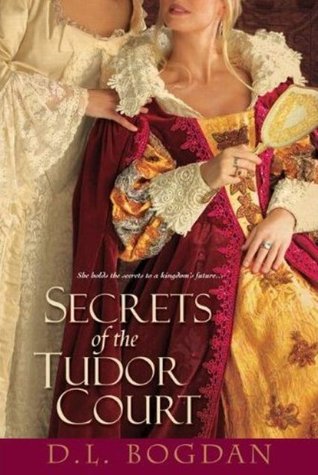
Secrets of the Tudor Court by D.L. Bogdan

Summary: When young Mary Howard receives the news that she will be leaving her home for the grand court of King Henry VIII, to attend his mistress Anne Boleyn, she is ecstatic. Everything Anne touches seems to turn to gold, and Mary is certain Anne will one day become Queen. But Mary has also seen the King's fickle nature and how easily he discards those who were once close to him. . .

Discovering that she is a pawn in a carefully orchestrated plot devised by her father, the duke of Norfolk, Mary dare not disobey him. Yet despite all of her efforts to please him, she too falls prey to his cold wrath. Not until she becomes betrothed to Harry Fitzroy, the Duke of Richmond and son to King Henry VIII, does Mary finds the love and approval she's been seeking. But just when Mary believes she is finally free of her father, the tides turn. Now Mary must learn to play her part well in a dangerous chess game that could change her life--and the course of history.

Review: An incredibly emotion story of Mary Howard that demonstrates the impact that Henry VIII had on people's lives.

Henry VIII's reign affected so many lives. So many people were murdered and many families lost a family member, be it a mother, father, son, daughter, cousin, etc. I've read a number of historical fiction novels about the Tudors and there has been a number of deaths in those books. Some of those books have been told from the viewpoint of queens that have been executed. None of those books have affected me as much as this book has. Mary Howard witnesses many deaths including those of her brother and cousins.

Along with all the great loss, comes the death of her true love. You can feel Mary's pain throughout the book and her burning desire to be happy, which includes being out of the grasp of her father. As much as I like Mary Howard, I do not understand her love of her father. He is downright abusive to her, puts her to work as a spy, and puts her in danger, yet she still wants to seek his approval and love. He is not a man worthy of admiration, much less love.

Rating:


Recommendation: I would recommend this book to those that enjoy historical fiction about the Tudors.